

Recently, PhD student Kiranpreet Gill, an Oxford Health Biomedical Research Centre researcher in the Depression Therapeutics Theme based at Birmingham University, undertook training in Zurich, using a £3,000 pump priming grant award.
The training at the Psychiatric University Hospital in Zurich was on the use of nitrous oxide (N2O) as a treatment for psychiatric disorders.
The workshop offered hands-on training in the administration of N2O, insights into the use of N20 for mood disorders in ongoing trials and an exploration of trial design and safety considerations for a planned trial for Major Depressive Disorder (MDD) in the UK.
In this article, Kiranpreet shares her experience of the training and time spent in the Zurich hospital.

“The workshop provided a comprehensive introduction to the theoretical and practical aspects of N2O in clinical use. The teaching covered areas including the pharmacology of N2O, its safety profile, the different stages of sedation and the importance of continuous monitoring to minimise risks.
I received practical training and learned how to operate an anaesthesia machine. Under supervision, I administered N2O to a participant, which gave me valuable hands-on experience in real-time monitoring and dose adjustment.
From the perspective of someone delivering the treatment, I learned what to watch out for in terms of adverse effects such as changes in movement, behaviour, or level of responsiveness, and how to use these observations to judge whether a participant is tolerating the treatment well.
This skill is particularly important, as it provides the clinician with the information needed to decide whether to continue, adjust, or even stop a treatment session in the rare event that side effects become concerning.
A particularly valuable aspect of the visit to the hospital was the opportunity to undergo the treatment myself, inhaling 50% N2O for 30 minutes. This allowed me to experience first-hand the subjective therapeutic effects, such as relaxation and altered perception of time, alongside mild adverse effects including involuntary twitching of hands and feet.

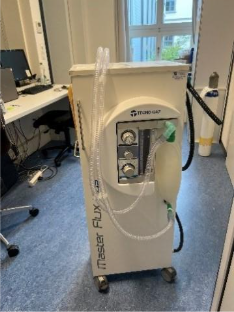
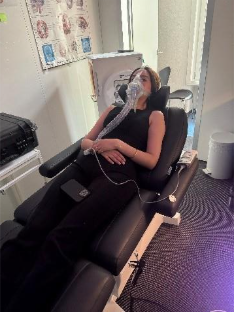
My discussions with other researchers throughout the workshop were extensive and covered both trial-specific issues and broader clinical applications. We spoke at length about the pragmatic dosing approach of the ongoing NITOS trial, which tailors N2O concentration to patient tolerability rather than applying a rigid fixed dose, a strategy that seems particularly important given the variability of psychiatric populations in their trial.
This training visit has directly shaped the development of our planned feasibility trial. I have gained practical skills in the safe administration of N2O and, by experiencing the treatment myself, I now have a deeper understanding of what participants are likely to feel during sessions. This dual perspective will inform both staff training and the monitoring protocols we put in place, ensuring that safety and patient comfort remain central.
The visit has also laid the groundwork for ongoing collaboration with the team at Psychiatric University Hospital. We have already discussed opportunities for potentially working together on future multi-site studies and building international links that will strengthen this area of research.
Overall, the visit has been pivotal in preparing for our planned Phase 2b feasibility trial, providing not only practical training and methodological insights but also the foundation for valuable collaborations. These outcomes will strengthen the quality and impact of our research while ensuring that the patient experience remains central to trial design”.
To learn more about our BRC’s work in Depression Therapeutics email: [email protected]