Recently, the University of Glasgow’s Centre for Developmental Adversity and Resilience hosted an event exploring the future of child attachment assessment.
Child attachment assessments evaluate the quality of a child’s emotional bonds with caregivers, often using observational, self-reported and play-based methods to identify attachment styles and relational patterns.
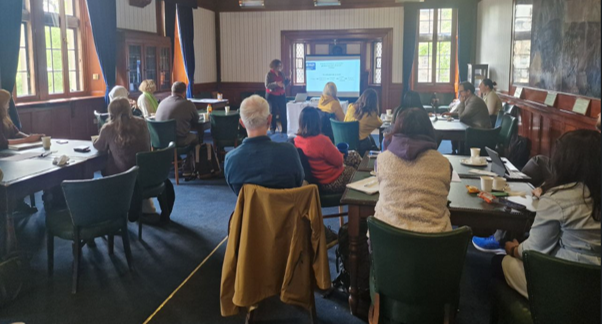
The “Future of Attachment” event brought together leading researchers, clinicians and educators to discuss the future of attachment assessment science and its potential impact on children’s mental health, wellbeing, relationships and development.
A brief history of child attachment and widely used measurement assessment was given by Professor Helen Minnis, University of Glasgow Professor of Child and Adolescent Psychiatry and NIHR Mental Health Translational Research Collaboration (MH-TRC) Mission Children and Young People’s workstream Co-Lead.
A further session on how AI can impact digital health attachment assessment was given by Professor Alessandro Vinciarelli, University of Glasgow, Professor of Computational Social Intelligence.
Group discussions included a game-based approach to measuring attachment, derived from the School Attachment Monitor (SAM) study and the issues translating children’s education and health data. The group also identified that digital tools could be used to speed up assessments of children who are on waiting lists.
Through these insightful discussions from cross-disciplinary perspectives, the group discovered that clinicians, teachers and other third parties all carry out in-depth observations of a child’s profile of needs, but this information isn’t routinely shared.
These valuable findings will be taken forward to inform future cross-disciplinary research and recommendations to policy makers.
Professor Helen Minnis said, “Thank you to everyone in attendance who illustrated a shared desire to make a better understanding of children’s attachment, possible.”
Our next steps are to find industry partners willing to collaborate to make SAM a reality that helps children, families, educators and clinicians support children’s attachment.
Visit the MH-TRC Mission Children and Young People’s Mental Health workstream page to learn more about their work.