
A new study is helping to answer an important question in mental health research: how do we make sure digital mental health trials produce results that are genuinely useful for young people, clinicians and policy makers?
Digital mental health interventions include tools such as apps and online programmes designed to support mental wellbeing. While randomised controlled trials are often seen as the “gold standard” for testing whether these tools work, many trials do not go on to inform real‑world decisions.
This study set out to understand what makes a trial informative meaning it produces evidence that people can trust and use.
The paper, “Understanding trial informativeness in digital mental health: perspectives from researchers and lived experience experts“, was published in the journal Trials.
The study took place in Nottingham and involved 13 participants, including 7 researchers with expertise in digital mental health and 6 young people with lived experience of mental health difficulties and of using digital tools.
Using interviews and participatory workshops, the team explored what makes a good, informative trial for digital mental health interventions aimed at children and young people.
The study identified four key features of an informative trial. Trials need to ask questions that matter to the people involved, be practical to carry out, produce trustworthy results, and be accessible and safe for participants.
Importantly, the research showed clear differences in perspective. Researchers tended to focus on study design and logistics, while young people placed greater emphasis on fairness, power dynamics and feeling respected.
Both groups agreed that involving patients and the public throughout the research process is essential. This kind of involvement helps ensure that digital tools are developed and tested in ways that reflect real needs, not just academic priorities.
By bringing together academic and lived‑experience voices, the study highlights how digital mental health research can be designed to deliver greater impact and value, particularly at a time when digital support for young people is expanding rapidly.
The study was carried out by researchers the in NIHR Mental Health Translational Research Collaboration Mission’s Children and Young People’s Mental Health workstream.
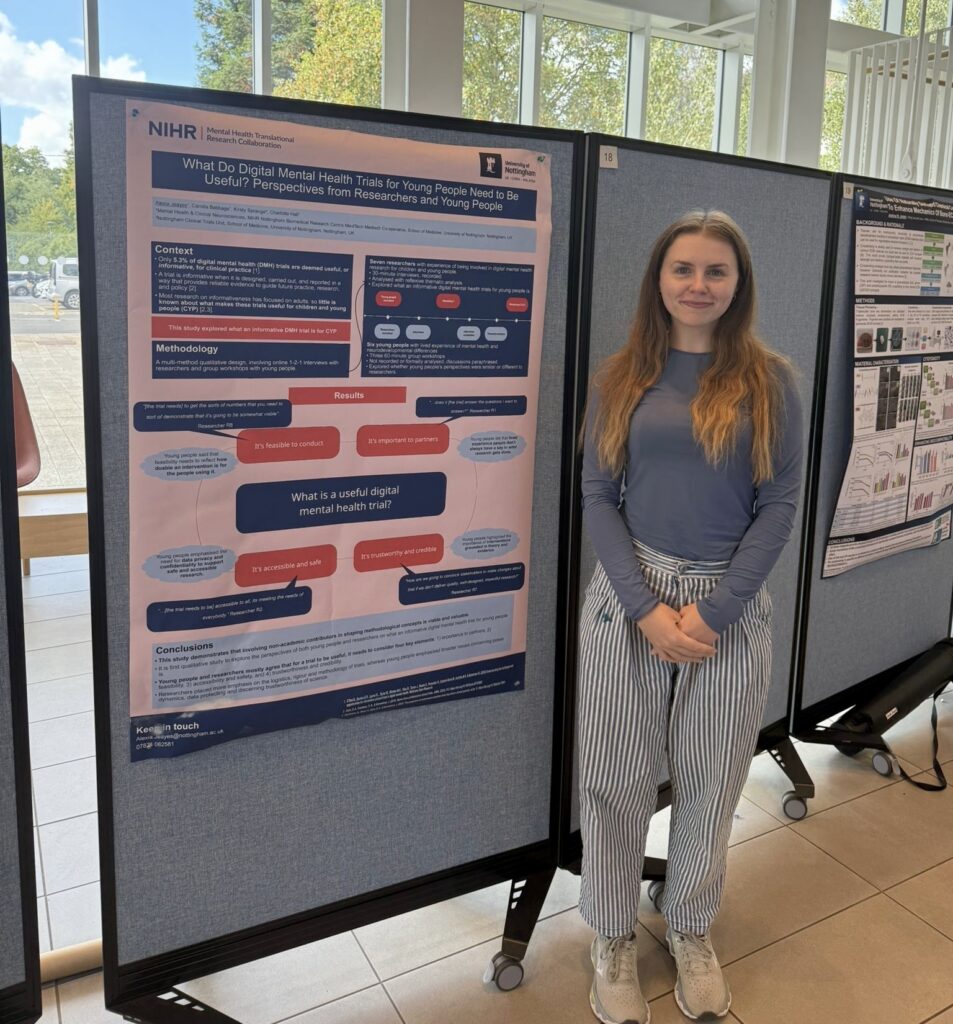
The research was led by Alexia Jeayes, PhD student at the University of Nottingham, working within the MindTech Medtech Co‑operative and the NIHR Biomedical Research Centre: Nottingham.
Alexia said: “Too often, digital mental health trials fail to deliver results that people can actually use. This research highlights that listening to young people and designing studies around their needs is just as important as having strong scientific methods. If trials are not meaningful or accessible, we risk wasting time, resources and the goodwill of participants.”
Visit our website to learn more about the CYP Mental Health workstream.