
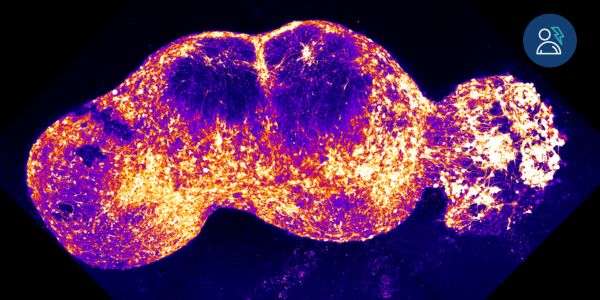
An interdisciplinary team led by the University of Oxford’s Professor Zameel Cader is part of a major new initiative which aims to redefine human-based research models for greater understanding of disease and the acceleration of new medicines.
A joint £15.9 million investment by the UKRI Medical Research Council (MRC), Wellcome and UKRI Innovate UK will enable the development of advanced, specific and highly reproducible human in vitro models with the aim of making them widely available to researchers in academia and industry.
In vitro models use isolated cells and tissues outside the living body and can provide new alternatives, helping to reduce the reliance on animal models in research and drug development.
A co-ordinated network of five interdisciplinary teams will focus on the development of in vitro disease models of liver, brain, cancer, pain, and blood vessels.
Advanced human in vitro models of pain
Chronic pain affects millions worldwide and remains one of the leading causes of disability. Effective treatments are limited because current models fail to fully capture pain biology.
The cluster led by Professor Zameel Cader (Nuffield Department of Clinical Neurosciences (NDCN), Kavli Institute) will develop innovative human models that better replicate the complexity of the pain system and induce pain-like states in the models, with a focus on neuropathic and osteoarthritis pain.
Professor Cader says “Our goal is to bring human biology to the core of pain research. By recreating the cellular environments where pain originates, we can uncover new mechanisms and improve drug discovery. An important aspect of this new programme is to bring our learning and tools to the pain research community, which ultimately, we hope will lead to treatments that will work”
Using cutting-edge stem cell and organoid technologies, the team will create advanced human in vitro models that incorporate sensory neurons, immune, and vascular components to mimic the complex interactions driving pain.
By combining these biological systems with molecular profiling and AI-based analysis, the research aims to reveal how pain arises and persists in human tissue. The models will serve as a powerful new platform for testing candidate therapeutics and reducing reliance on animal models in pain research.
Professor Cathy Ye (University of Oxford Department of Engineering Science), who is leading the bioengineering part of project said: ‘‘I am really excited to be part of this interdisciplinary team to provide a more effective alternative to animal models. This project supports efforts to replace animal testing in medical research. By linking human in vitro models to patient clinical features, the research will help identify why some individuals respond differently to pain medications, paving the way for tailored treatments.’’
Tonia Vincent, Associate Director of the Kennedy Institute, added: “We are excited to be part of this project in which we will model nerve and blood vessel remodelling that occurs in the context of osteoarthritis and which contributes to the development of pain. This project will allow us to identify and validate new approaches to targeting pain in this hard to treat patient group”.
This project takes an innovative, interdisciplinary approach that combines engineering, stem cell science, and clinical insight from the University of Oxford’s Nuffield Department of Clinical Neurosciences, Kavli Institute for Nanosciecne Technology, The Kennedy Institute of Rheumatology, and Department of Engineering Science, as well as Medicines Discovery Catapult and MaxWell BioSystems,
Funding from our BRC supported earlier analyses identifying genetic drivers of pain, which the team will now test directly in the new human models. Grounded in the needs of people with lived experience of chronic pain, the BRC: Oxford Health PPIE group supported the development of the project and their continued involvement will keep patient priorities foremost.