
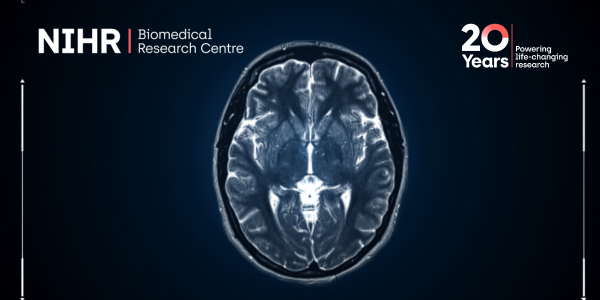
Researchers have identified a brain mechanism that could help explain ketamine’s unusually rapid antidepressant effects, providing new clues for the development of faster and potentially more targeted treatments for depression.
Depression is a major global health challenge, and for some people it can become persistent or recurrent and difficult to treat. While a range of effective treatments is available, conventional antidepressant medications can take several weeks to produce benefits and do not work for everyone.
Ketamine has emerged as an important new avenue in antidepressant research because its effects can occur much more rapidly than those of conventional antidepressants. However, exactly how ketamine produces these effects in the human brain remains poorly understood.
In a study funded by the Medical Research Council and supported by the National Institute for Health and Care Research (NIHR) Biomedical Research Centre (BRC): Oxford Health, researchers have found evidence that ketamine alters activity in the habenula, a small brain region involved in processing negative experiences and guiding how we learn from them.
Previous research in animals suggested that excessive activity in the habenula may be associated with depression and that ketamine can act on this region. The new study, published in Current Biology, provides experimental evidence that ketamine can also reduce habenula responses to unpleasant experiences in the human brain.
The researchers studied healthy volunteers using functional magnetic resonance imaging (fMRI), undertaken at the Oxford Centre for Integrative Neuroimaging. During scanning, participants received mild electrical stimulation to the hand, individually calibrated to a level they could tolerate. Some participants had received ketamine the previous day, administered by a health care professional at the NIHR Clinical Research Facility: Oxford Health.
The researchers found that participants who had received ketamine showed reduced habenula activity in response to the unpleasant stimulation. The study also found preliminary evidence that this change could influence how unpleasant experiences are subsequently remembered, with those experiences potentially recalled as less negative.
The findings suggest a possible mechanism through which ketamine could alter the brain’s processing of negative experiences.
Erdem Pulcu, Senior Researcher at the Department of Psychiatry, University of Oxford, and lead author of the study said:
“Ketamine is particularly interesting because its antidepressant effects can emerge much faster than those of conventional antidepressants, but we still have a great deal to learn about how those effects arise in the human brain.
“Our findings point to the habenula as one part of that mechanism. This small brain region plays an important role in how we respond to and learn from negative experiences, and we found that ketamine reduced its response to unpleasant events.“What is particularly encouraging is that our findings align with earlier research in animal models. Establishing this kind of correspondence between animal and human studies is important if we want to use discoveries about ketamine to develop new treatments that retain its potential benefits while reducing unwanted effects and risks.”
The researchers emphasise that the study was conducted in healthy volunteers rather than people with depression. It therefore does not establish that changes in habenula activity are responsible for ketamine’s antidepressant effects in patients.
The next phase of the research will investigate whether ketamine produces similar changes in the habenula in people with depression who have not responded to conventional antidepressant treatments.
Catherine Harmer, Professor of Cognitive Neuroscience at the Department of Psychiatry, University of Oxford, Co-Lead of the NIHR BRC: Oxford Health’s Depression Therapeutics Theme and one of the senior authors of the study said:
“The important next question is whether we see the same mechanism in people living with difficult-to-treat depression. If we do, it could help us understand why ketamine works for some patients and ultimately guide the development of safer and more effective antidepressant treatments.”
Read the full paper, ‘Ketamine attenuates habenula activity in response to aversive outcomes during Pavlovian learning’, published in Current Biology.