Researchers from NIHR Biomedical Research Centre (BRC): Oxford Health Depression Therapeutics Theme have published new study findings that could help pave the way for a new generation of treatments for depression.
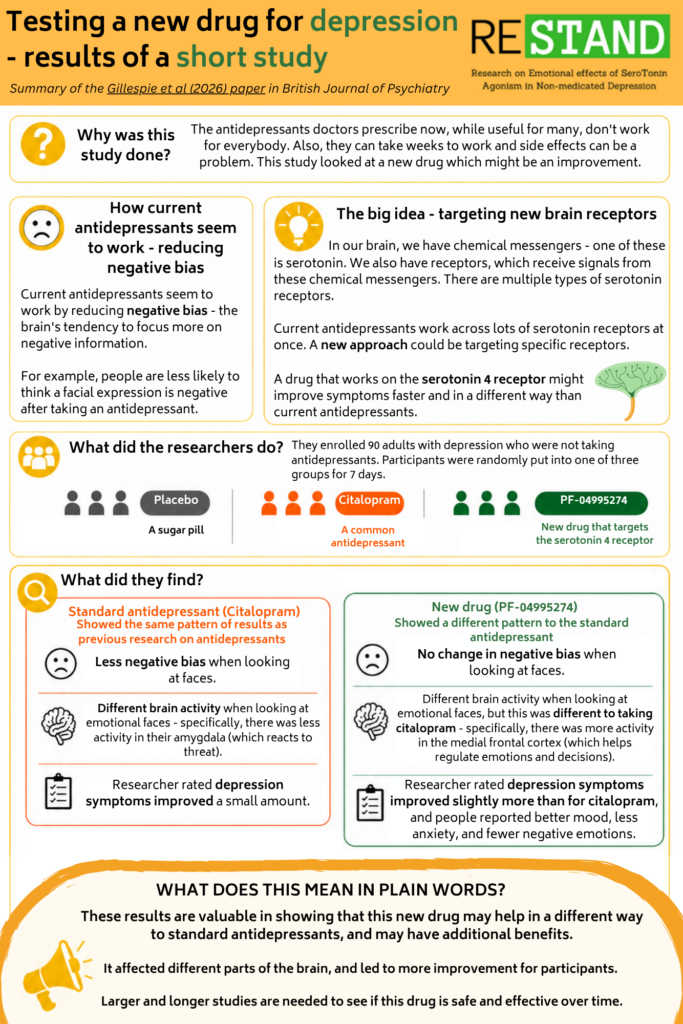
The study, “Early effects of a novel 5-HT4R agonist (PF-04995274) and the SSRI citalopram on emotional cognition in unmedicated depression: RESTAND study”, investigated the effects of a novel selective serotonin 4 receptor agonist, compared with the widely prescribed antidepressant citalopram, to explore the ways in which it might be helpful as a potential treatment for depression.
Depression affects millions of people worldwide, yet current antidepressants do not work well for everyone and can take several weeks to have a noticeable effect. Researchers are therefore exploring new ways of targeting the brain systems involved in depression.
Serotonin is a chemical messenger in the brain that helps regulate mood, emotions and thinking. Researchers believe that drugs acting on specific serotonin receptors may offer faster benefits for certain groups of patients than conventional antidepressants, which act on serotonin receptors more broadly.
The RESTAND study recruited 90 adults with unmedicated major depressive disorder and compared seven days of treatment with the selective serotonin 4 receptor agonist, citalopram or a placebo. Participants completed tests designed to measure emotional processing and underwent functional magnetic resonance imaging (fMRI) brain scans.
The team looked at emotional processing because previous studies have found that conventional antidepressants reduce negative biases in thinking e.g. interpreting ambiguous facial expressions as showing negative emotions. This is thought to be one of the key ways that antidepressants help people with depression.
As expected, citalopram produced the same pattern of changes in emotional processing typically seen with antidepressant treatment. However, the selective serotonin 4 receptor agonist appeared to work differently.
Rather than altering negative emotional bias in the same way as citalopram, the drug was associated with increased activity in areas of the brain involved in higher-order thinking and memory. Researchers also observed early improvements in some measures of depression symptoms, anxiety and negative mood specifically.
The findings suggest that the selective serotonin 4 receptor agonists has the potential to lead to early antidepressant effects and through a different biological pathway to existing antidepressants. While larger clinical trials are needed, the results provide important evidence that this class of drugs could represent a promising new treatment approach for depression.

Dr Amy Gillespie, lead author and Theme Coordinator for the NIHR BRC: Oxford Health Depression Therapeutics Theme said:
“Current antidepressants have transformed many lives, but they do not work for everyone and can take time to have an effect. By investigating new targets such as the selective serotonin 4 receptor agonists, we hope to better understand the biology of depression and accelerate the development of more effective treatments for patients.”
“What is particularly encouraging about these results is that we saw early improvements in symptoms alongside distinct changes in brain activity. While larger studies are needed, this research provides important evidence that could represent a promising new direction for depression treatment.”
Learn more about the NIHR BRC: Oxford Health Depression Therapeutics Theme.