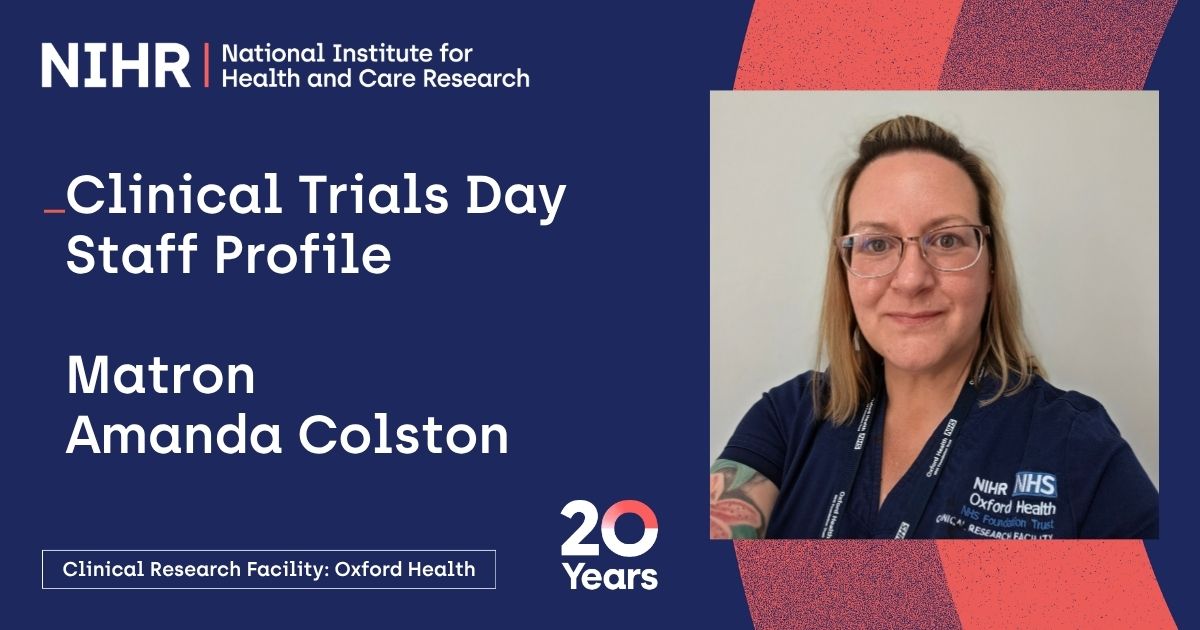
This May 20 – Clinical Trials Day provides an opportunity to recognise the vital role of clinical research and the people behind it, celebrate progress made through trials, and raise awareness of their importance in improving patient care and developing new treatments.
The NIHR Clinical Research Facility: Oxford Health supports the delivery of clinical trials, providing the infrastructure needed to evaluate new treatments and improve understanding of mental health. In this short interview, Matron Amanda Colston reflects on how clinical trials are delivered safely and collaboratively, and the difference they can make for patients now and in the future.
Our Biomedical Research Centre generates and leads new research, while the Clinical Research Facility provides the clinical environment to deliver and test those studies with patients, working together to translate discoveries into improved care.
This May 20 – Clinical Trials Day provides an opportunity to recognise the vital role of clinical research and the people behind it, celebrate progress made through trials, and raise awareness of their importance in improving patient care and developing new treatments.
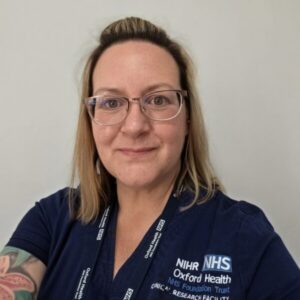
Could you briefly tell us who you are and what your role is at the Clinical Research Facility: Oxford Health , and why clinical trials are such an important part of healthcare?
I’m Amanda, the CRF Matron at Oxford Health. I’m responsible for the safe delivery of clinical research, leading our nursing and research teams, and ensuring participants are at the centre of everything we do. Clinical trials are how we move healthcare forward. Without them, we don’t improve treatments, we don’t generate evidence, and we don’t give patients access to new possibilities. It’s also about making sure research sits alongside everyday NHS care, not separate from it.
From your perspective as Matron, what makes the work happening at the CRF, and the clinical trials delivered here, so important for patients locally and beyond?
What we do here directly connects patients to innovation. Many of our studies are early phase or complex, particularly in mental health, where new treatments are urgently needed. That feels particularly important in mental health, where treatment options have historically been more limited and progress hasn’t always kept pace with need. Patients locally can access cutting-edge research, and the knowledge generated contributes nationally and globally. It’s both immediate impact and long-term change.
People often hear about clinical trials but don’t always see what’s involved, what does your role involve in supporting patients and research teams day to day?
Day to day, I make sure the environment is safe, the teams are supported, and studies are delivered to the highest standard. That includes oversight of governance, workforce, training, and patient experience. For patients, it’s about making research feel accessible, safe, and worthwhile. For staff, it’s about giving them the structure and support to deliver complex studies well. A lot of the studies we support are complex, which is why consistency, safety, and experience matter so much.
How do clinical trials give patients opportunities they might not otherwise have, and what difference have you seen that make in real life?
Clinical trials can offer access to new treatments, closer monitoring, and time with specialist teams that isn’t always possible in routine care. But beyond that, they give people a sense of purpose and contribution. I’ve seen patients feel genuinely empowered by being part of something bigger than themselves, even when the outcome isn’t what they hoped. It’s always a choice, and it won’t be right for everyone, but for many people it’s a meaningful option.
Clinical Trials Day celebrates the people and systems behind research, what does this day mean to you and to the teams working at the CRF?
For me, it’s about recognising the people who make research happen day in, day out. It’s not just the science, it’s the nurses, research assistants, doctors, administrators, and participants. It’s a reminder that clinical research is a team effort and that every role matters. Recognising each contribution matters if we want to sustain skilled, motivated teams in research.
Clinical trials rely on many different professionals working together, how do nursing, clinical, and research teams come together at the CRF to make studies happen safely and successfully?
It only works because of collaboration. We bring together clinical expertise, research knowledge, and operational delivery. At the CRF, we’ve built a model where those roles are genuinely integrated, not working in silos. That’s what allows us to deliver complex studies safely and consistently. There’s a shared responsibility for patient safety and study quality, because everyone really cares about the participants and the research.
What keeps you motivated working in clinical research, and what would you say to someone considering a career supporting clinical trials?
What keeps me motivated is the impact. You can see the difference research makes, both for individual patients and for the future of healthcare. Research doesn’t always go to plan, but even then you’re learning, improving, and contributing to something that lasts. For anyone considering this career, I’d say it’s challenging, but it’s meaningful. You’re part of something that genuinely moves healthcare forward, and that feels special.
How to get involved
More information on how you can get involved with our BRC research here.
More information on how you can get involved with our Clinical Research Facility: Oxford Health research here.
Sign up on the NIHR Be Part of Research website to be contacted about studies that interest you.