NIHR Biomedical Research Centre: Oxford Health has made a commitment to Equality, Diversity and Inclusion (EDI) and will strive to ensure it underpins all activities. Here we demonstrate this through exemplars and articles highlighting best practice and initiatives in our BRC, as well as sharing partner activities and general EDI content.


New position statement highlights the importance of inclusive and representative research data

NIHR Biomedical Research Centre (BRC): Oxford Health, has published a new position statement on the use of external datasets, reaffirming its commitment to research that is inclusive, representative, and relevant to the diverse communities it serves.
The statement recognises the important role that externally sourced datasets and biobanks play in advancing health research, while acknowledging that many widely used datasets have well-documented limitations in their representation of different population groups.
Importantly, the statement is intended to prompt critical reflection on how issues of inclusion and representativeness are considered when using external datasets. It asks researchers to think carefully about the strengths and limitations of the data they use, and how these may influence research findings and their interpretation.
The statement can also be referenced in publications, funding applications and other research outputs to provide additional context on the NIHR BRC: Oxford Health’s approach to research inclusion, alongside the researcher’s specific limitations relevant to their studies and the steps taken to mitigate them.
Drawing on examples of good practice from across themes, the statement highlights innovative work already underway to improve inclusion, accessibility and representation in research. These examples demonstrate the breadth of activity already taking place across the BRC.
The statement outlines aspirations for the future, and the organisation looks forward to building on this work in partnership with the Theme Equality, Diversity and Inclusion (EDI) Network. This includes exploring opportunities to improve representation in future datasets, and contributing to wider conversations about transparency, inclusion and responsible use of data across the research sector.
Developed through consultation with the Theme EDI Network and the Patient and Public Involvement and Engagement (PPIE) Operations Group, the statement was subsequently reviewed and approved by the NIHR BRC: Oxford Health Steering Committee.
Learning Disability Week 2026: Do you see me?
Learning Disability Week (15–21 June 2026), led by Mencap, is an annual opportunity to raise awareness, challenge inequalities and celebrate the lives of people with a learning disability. This year’s theme, “Do you see me?”, calls on all of us to ensure people with a learning disability are truly seen, heard and valued in every part of society – including health research.
The LeDeR review and national data revealed the scale of health inequality during COVID‑19, with people with a learning disability several times more likely to die from the virus than the general population, rising to over six times higher in some estimates.
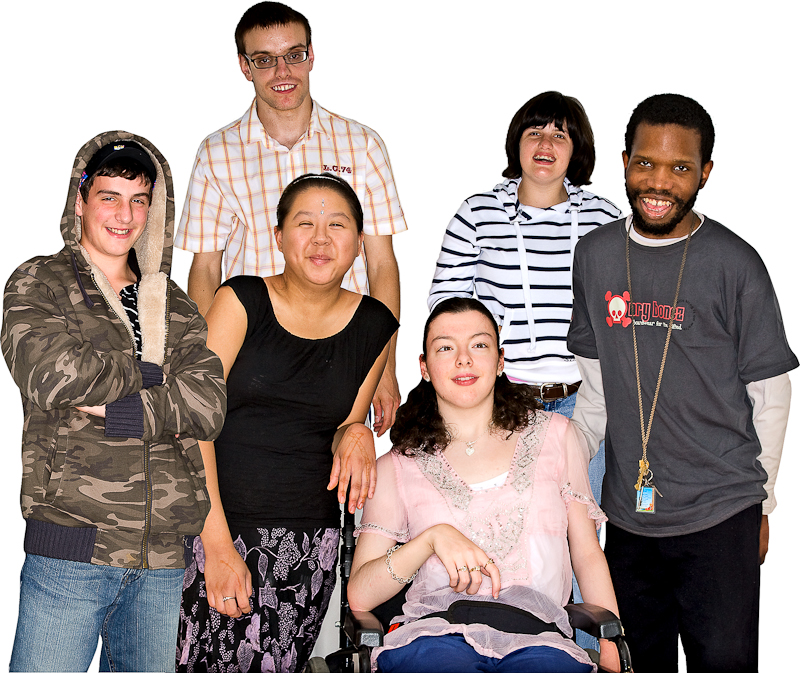
People with a learning disability and their carers bring vital lived experience that improves the relevance, accessibility and impact of research. Without their involvement, we risk designing studies that do not meet the needs of those they aim to serve.
A strong example of this approach in action is the new Co‑MAID study, led by Oxford Health NHS Foundation Trust (OHFT) in collaboration with the University of Birmingham. This NIHR‑funded study is testing a co‑produced mental imagery intervention to reduce anxiety in people with a learning disability, with the aim of informing a future large‑scale trial. What makes this work particularly powerful is the way people with a learning disability and their carers are embedded throughout the research. A co‑design group based locally has co‑created accessible study materials and produced videos, including peer‑led conversations about anxiety that are now being used in therapist training. People with lived experience are also involved at every level, including on the study steering committee. The group are also widening the dissemination of other research findings in creative and accessible ways through zines, infographics and video. This demonstrates how inclusive research not only improves accessibility but enriches the quality and impact of the work itself.
Our Equality, Diversity and Inclusion EDI Project Manager, Lizzie Carline, who was previously Development Manager at Wirral Mencap for 6 years, saw first-hand what meaningful inclusion looks like. She worked closely with public sector organisations to ensure that people with a learning disability weren’t just an afterthought, but part of health and social care planning from the beginning, ensuring participation was informed and meaningful – and paid for. Lizzie is always happy to support researchers to make their work more accessible and inclusive, please do get in touch to continue the conversation.
Dementia Action Week, 18–24 May 2026: Championing Inclusive Research through the Oxford SABHEE Study
This Dementia Action Week, we are reminded that progress in dementia research depends not only on scientific discovery, but on whose voices are heard.
At the NIHR Biomedical Research Centre Oxford Health the Dementia Theme is focused on improving early detection, prevention and personalised care, but achieving this requires research that reflects the diversity of the communities it serves.
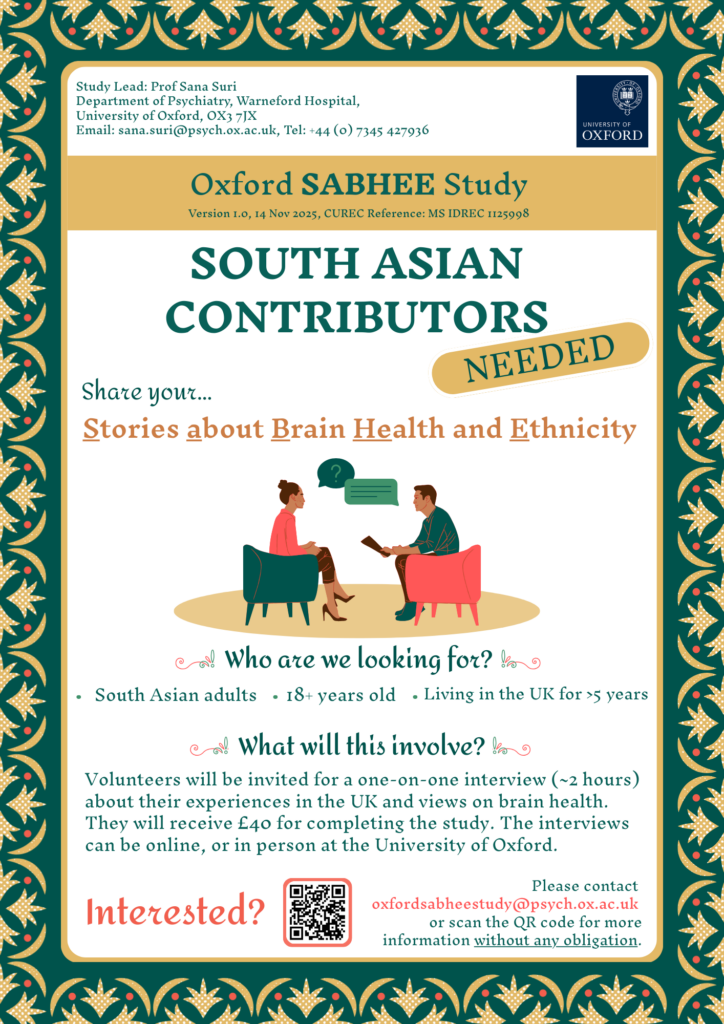
The Oxford SABHEE (Stories about Brain Health and Ethnicity) Study embodies this approach. “Sabhee” means “everybody” in Hindi, an ethos at the heart of the study. It focuses on South Asian communities in the UK, who have historically been underrepresented in brain health research. By capturing lived experiences and personal stories, SABHEE explores how culture, migration and everyday life shape brain health and dementia risk.
This approach ensures that evidence is relevant, culturally informed, and able to drive meaningful change in care and policy. The SABHEE Study is actively recruiting for South Asian Contributors, so please read here for more information: Oxford SABHEE (Stories about Brain Health and Ethnicity) Study or email Sana Suri [email protected].
Race Equality Week 2026: improving research engagement with African, Caribbean and Asian communities
Race Equality Week 2026 takes place from 2 to 8 February 2026, bringing together organisations across the UK to accelerate meaningful action on racial inequality. This year’s theme, #ChangeNeedsAllOfUs, emphasises that progress depends on collective responsibility and that every role, every decision, every action matters.
At BRC: Oxford Health, the week highlights ongoing efforts to address inequalities in mental health research and care. A major project leading this work is the new research collaboration tackling ethnic inequalities in perinatal severe mental illness, which focuses on improving outcomes for Black, Asian and minority ethnic women during the perinatal period. By working directly with communities and addressing gaps in evidence, the project aims to drive long‑term, structural change in maternal mental health services.
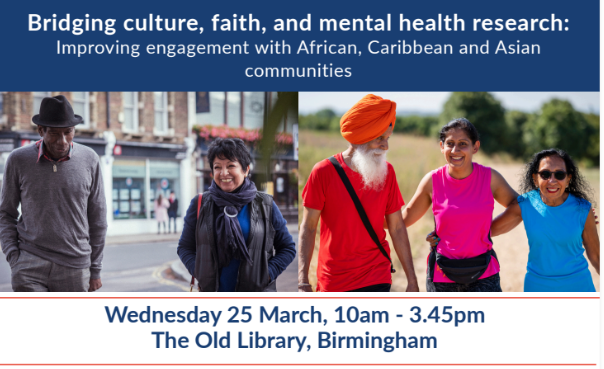
Additionally BRC: Oxford Health and national partners are hosting the event: Bridging Culture, Faith and Mental Health Research, which focuses on strengthening engagement with African, Caribbean and Asian communities in mental health research and care.
Together, these initiatives reflect the core message of 2026: real change requires all of us working collaboratively to build equitable, culturally informed research that serves every community.
Count Me In: A landmark for inclusive research

Originally initiated by University of Oxford, Department of Psychiatry’s Professor Andrea Cipriani (BRC: Oxford Health Data Science Co-Theme Lead) and colleagues at Oxford Health NHS Foundation Trust (OHFT), the Count Me In (CMI) initiative has now officially launched across OHFT services – a major milestone for inclusive research.
While its roots lie in addressing recruitment challenges in mental health studies, CMI has been progressed and scaled by the Data Science Theme within BRC: Oxford Health, ensuring robust digital integration and governance.
CMI uses a researcher-led, opt-out model, moving beyond traditional clinician-led recruitment to enable rapid identification of eligible participants and improve diversity in research engagement. Early pilots showed transformative impact, increasing contactable patients by over 600% compared to standard methods. Now, with full integration into the RIO electronic health record system, CMI is live and ready to support research across the trust.
Professor Andrea Cipriani
For BRC: Oxford Health, this launch is more than operational, it’s strategic. Researchers affiliated with OHFT, including those with Honorary Contracts or Letters of Authority, can now benefit from streamlined access to research-ready cohorts. This accelerates BRC: Oxford Health-funded projects and strengthens collaboration across the NHS and beyond. With growing national and international interest, CMI positions OHFT and BRC: Oxford Health as leaders in data-driven, equitable research recruitment.
Depression Therapeutics PPIE: Co-producing accessible participant information

The development of the Summary Participant Information Sheet (PIS) guidance was initiated by and conducted with the Depression Therapeutics Patient and Public Involvement (PPI) group. The group had consulted on a number of research studies and recognised common problems with all the participant information sheets.
The group suggested that providing researchers with examples of summary, accessible participant information sheets – and guidance on how to create these – could inspire and support them to develop better materials at an early stage of preparing their study.
The examples and guidance were co-produced to address barriers to participation, particularly for individuals with lower literacy levels or those facing health inequalities. In Oxford, over half of adults aged 18–65 have low literacy, making traditional, jargon-heavy information sheets inaccessible. The summary PIS aims to bridge this gap by offering concise, engaging, and easy-to-understand materials that complement, rather than replace, the full information sheets. This initiative not only improves recruitment and consent processes but also fosters trust and engagement in research.
The process of developing the guidance involved iterative feedback from PPI contributors and researchers, resulting in practical tips and approved examples across different study types, including drug trials, MRI studies, and dance interventions. Ethics committees have responded positively, with NHS boards encouraging further simplification of materials.
Researchers are encouraged to co-design their summary PIS with PPI groups, ensuring materials are welcoming and prioritise the information members of the public want to hear. The guidance pack emphasises the importance of clear language, thinking about the perspectives of different people, and visual design, and includes top tips, such as using everyday language, pre-empting concerns, and testing readability.
This collaborative approach underscores the vital role of PPIE in ensuring research is inclusive, accessible, and responsive to the needs of diverse communities. By involving public contributors from the outset, the guidance prioritises clarity and relevance for potential participants and encourages a shift in perspective to reflect lived experience.
For further collaboration, researchers can contact Dr Amy Gillespie, Project Manager and PPI Lead for Oxford Health Depression Therapeutics.
Using art and nature to support postnatal women from minority ethnic groups

The Mother-well Project which was led by Dr Marta Santillo (based in the Preventing Multiple Morbidities Theme) and funded by the first BRC: Oxford Health EDI pump prime competition, ran between March and July 2025.
This project explored postnatal mental health and quality of life among mothers from minority community ethnic groups, following principles of the Person-Based Approach (PBA) to intervention development. This approach combines theory and evidence-based approaches and places the needs of the target groups at the centre of the design process. This approach helps ensure that interventions are not only effective but also meaningful and acceptable.
To deeply understand the social context and needs of the mothers, we conducted a series of PPIE workshops and a rapid scoping review. These activities helped us gather evidence on:
– How quality of life is perceived by postnatal women from minority ethnic groups.
– How nature connection influences their wellbeing.
– What existing non-clinical interventions have been designed specifically for postnatal mothers from these communities.
As part of the workshops held in Bristol (with Refugee women of Bristol) and Oxford (with the Equal Start East Timor group), we integrated creative engagement methods. These included art-based and nature-based activities to foster trust, build connection, and open up conversations around quality of life and nature connection after birth.
During the course of the Mother-well Project, we realised that building a sense of trust between researchers and community partners was essential. Connecting with women who attended our PPIE workshops allowed us to establish that trust and continue collaboration beyond the workshops themselves.
As part of the project’s outputs, we created a booklet featuring the collages made by the women, along with quotes and reflections from their responses around quality of life and nature connection. This booklet followed a co-design process, developed collaboratively by researchers and an artist-designer from the University of Bristol, and shaped iteratively with feedback from project coordinators from the Oxford and Bristol community groups.
We also collaborated with a local Oxford-based artist to create a collage of collages, a collective artwork that will travel between the two community groups. This piece will be returned to the community and exhibited locally, reinforcing the project’s commitment to community ownership and visibility.
The Mother-well Project allowed us to collate evidence around mothers’ views on quality of life and nature connection, helping us better understand their needs regarding non-clinical interventions aimed at improving wellbeing and mental health. It also gathered insights into which existing interventions have been designed for postnatal mothers from minority ethnic groups and where the gaps might be, informing plans for future work.
This project will inform the next steps in developing a non-clinical intervention, potentially art-based or nature-based, to support postnatal mental health in these communities, following the Person-Based Approach principles.
But most importantly, the Mother-well Project enabled us to connect with local communities, initiating collaborations and conversations around postnatal health and exploring how art and nature can support women and foster meaningful connections between researchers and communities.
Themes EDI Network to champion inclusive research

In July 2025, BRC: Oxford Health launched its new Themes Equality, Diversity and Inclusion (EDI) Network, bringing together EDI Ambassadors from across the BRC’s research themes and representatives from key groups, such as the Department of Psychiatry’s Race Equality Group. The network aims to strengthen collaboration, share best practices, and embed inclusive approaches across both workforce and research activities.
The inaugural meeting, chaired by EDI Academic Lead, Dr Angharad de Cates, and EDI Project Manager Lizzie Carline, provided an opportunity to discuss the network’s purpose: to raise awareness of EDI work across themes, identify opportunities for joint initiatives, and provide a platform for discussion and reflection.
Structured as quarterly online meetings, with one annual in-person workshop, the network will feature regular updates from themes, opportunities for consultation, and recognition of best practice. It is designed to be a dynamic space for learning, sharing, and driving forward meaningful change.
Together with the BRC: Oxford Health Partners EDI Working Group, these networks reflect a strong, collaborative commitment to equity and inclusion in health research.
Community voices at Oxford Pride 2025: Insights into mental health research
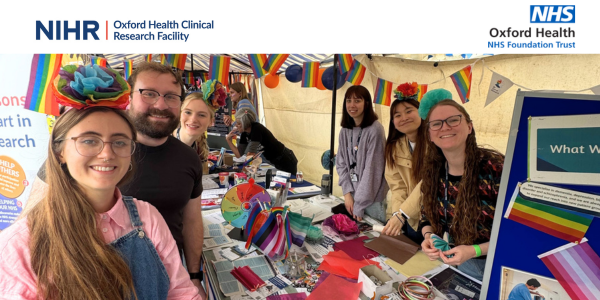
Researchers and colleagues from OHFT and the Oxford Health Clinical Research Facility (CRF: Oxford Health) proudly participated in Oxford Pride 2025. The event, held in South Park following a vibrant (albeit a bit drizzly) city parade, provided a platform to engage the LGBTQIA+ community and seek their views on mental health research. Through a series of open questions, the team gathered valuable insights that will help shape more inclusive and transparent research practices.
When asked “What would make you want to volunteer for a research study?”, responses centred on safety, transparency, and the desire to make a difference. Participants expressed interest in receiving study outcomes and ensuring their involvement would benefit future patients.
The question “What do you think about when someone says, ‘mental health research’?” revealed a perception of the field as underfunded and underpublicized, yet essential. Comments highlighted a need for greater visibility and investment.
Angela Conlan, CRF: Oxford Health Public and Patient Involvement, Engagement and Participation Lead said: “It was wonderful to return to Oxford Pride this year. We had the pleasure of meeting many attendees who were keen to learn about the latest advancements in mental and cognitive health and expressed interest in participating in our studies.
These reflections underscore the importance of engaging diverse communities in research dialogue, aligning with BRC: Oxford Health’s commitment to equality, diversity, and inclusion.
Talking about and tackling racism in mental health care

BRC: Oxford Health Equality, Diversity and Inclusion lead Professor Kamaldeep Bhui published an op-ed piece on talking about and tackling racism in mental health care for the publication Eastern Eye.
Professor Bhui’s article speaks about the racism that is evident in medical and nursing training, current delivery of care, in knowledge production and research and the formulation of laws and policies in NHS care.
Inclusive research & exclusion criteria workshop
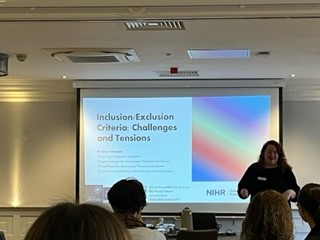
In March 2024, the BRC: Oxford Health held a Joint EDI & PPIEP workshop in Oxford to discuss barriers to research participation, including any unintended consequences, driven by study inclusion & exclusion criteria, and ways to overcome them.
Read more about speakers and topics of discussion on our News pages.
Race Equality Recognition Award 2024

Fitri Fareez Ramli, (MD, MMEDSCI Pharmacology, DPhil Psychiatry, 2021), won the Race Equality Recognition Award 2024 given by the University of Oxford’s Department of Psychiatry.
Fareez is currently working with Depression Therapeutics Co-Theme Lead Prof. Philip Cowen and Dr. Beata Godlewska and his current research focuses on ebselen, a lithium-like compound, as a potential treatment for resistant depression.
Fareez received this award for his artwork, which visually represents psychiatric concepts and experiences, engaging the public with messages about mental health.
Conducting inclusive participatory research in NHS settings

Dr Roisin Mooney, Project Manager and Postdoctoral Researcher at the University of Oxford’s Department of Psychiatry outlines her thoughts on important considerations for inclusive research, based on her experience of recruiting people of South Asian heritage to NHS research, a group typically underrepresented in research.
Read Dr Mooney’s reflections on the Department of Psychiatry website.
ORIGIN study

The ORIGIN study was set up to allow 16-24 year olds from underrepresented groups to actively co-design an online arts and culture intervention aimed at reducing anxiety and depression
The NIHR funded ORIGIN (Optimising cultural expeRIences for mental health in underrepresented younG people online) study has been funded to facilitate 16-24 year olds, particularly from underrepresented groups, to co-design an online arts and culture intervention aimed at reducing anxiety and depression.
The ORIGIN study, as part of the Mental Health in Development BRC: Oxford Health Theme, is being led by Dr Rebecca Syed Sheriff and involves BRC: Oxford Health Director, Professor John Geddes and EDI Academic Lead, Professor Kam Bhui as co-applicants.
The study will be an active collaboration of 1500 young people with NHS Trusts, UK universities, museums and charities. Importantly, and emphasizing the BRC’s EDI commitment, the study participants will include underrepresented autistic and LGBTQ+ young people, ethnic minorities, and those on NHS waiting lists for mental health support, including in some of the most deprived areas of the UK such as Cornwall, Liverpool, Sheffield and Blackpool. Active inclusion of these underrepresented individuals will ensure a relevant, and engaging, intervention is produced.
The study arose from a pilot project, O-ACE that included diverse young people from its inception. One of the grant holders of the ORIGIN study is a public co-applicant with lived experience of being autistic and having mental health issues, and with connections to Barnardo’s and Youth Futures Foundation.
University of Oxford exemplars
Creating a more equitable research funding environment
The University of Oxford has recently published a progress report on its Action Plan for Equity and Inclusivity in Research Funding, highlighting practical steps taken over the last three years to reduce barriers and improve access to research funding opportunities for underrepresented groups. The report demonstrates how sustained action, improved institutional practices, new resources, and sector-wide collaboration can help create a fairer research ecosystem.
One particularly useful output from the University’s work is the EDI Responsiveness Matrix and Toolkit, which encourages organisations to review how inclusive their processes are, from communications and accessibility to decision-making and reporting. The principles also provide a helpful framework for considering how we design and deliver funding opportunities, events, development programmes and other forms of support. Small changes, such as accessible communications, transparent processes, inclusive timing of activities and recognition of diverse career pathways, can help create an environment in which all researchers have the opportunity to thrive.
The Oxford report reminds us that equitable research careers are shaped not only by funding decisions, but by the culture, support, leadership and infrastructure surrounding researchers. The report resonates with our commitment to inclusive research culture, including accessible support, inclusive leadership, transparency and the use of data to identify and address barriers.
Black History Month 2025: Race and Psychiatry Journal Club
Black History Month 2025 invites us to reflect on the enduring importance of race and ethnicity in shaping inclusive research practices. In health and social care, the underrepresentation of Black communities in research not only perpetuates disparities but also limits the relevance and impact of scientific findings.
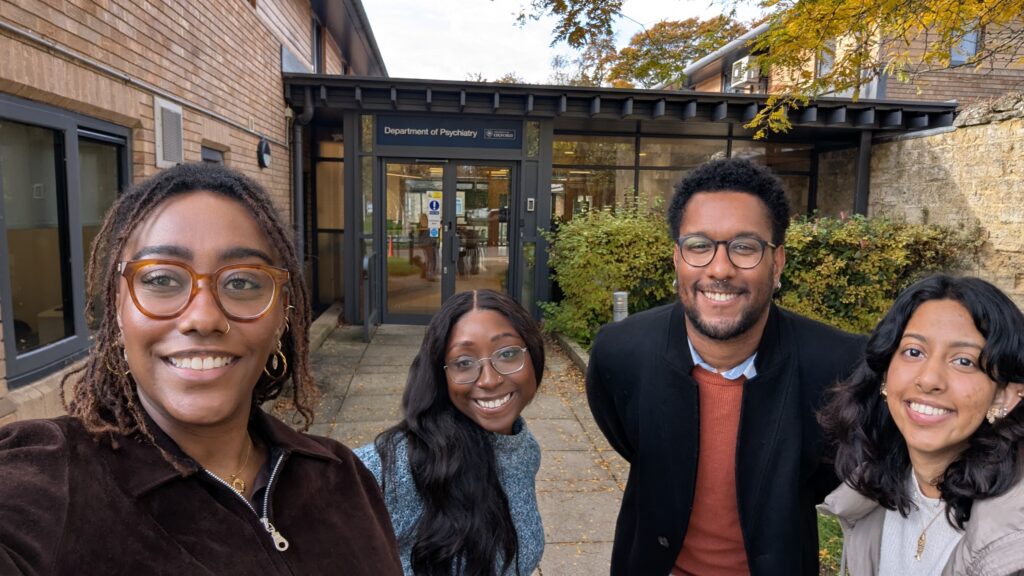
One exemplary initiative is the Race and Psychiatry Journal Club launched by the Department of Psychiatry at the University of Oxford. This innovative space, which is currently co-led by Briana Applewhite and Sakshi Rajesh, encourages critical discussion around race, mental health, and systemic inequalities in psychiatric research. It empowers students and researchers to challenge assumptions and explore how racial bias can influence both clinical practice and academic inquiry.
In 2024, the club collaborated with members of the BRC: Oxford Health Diversity in Research Group to enhance its impact, drawing on valuable insights from a Mental Health Advisor and individual with lived experience.
In a recent interview, Maya Ogonah, a co-founder of the club, shared:
“The journal club has given me the confidence to speak about race and mental health in academic spaces where these conversations are often missing.”
This quote underscores the transformative power of inclusive spaces that centre marginalised voices.
The club’s impact was recognised earlier this year when the Department of Psychiatry’s Race Equality Working Group, within which the club sits, won the Vice-Chancellor’s Award for Commitment to Equality, Diversity and Inclusion.
Most recently, the club hosted Dr Nkasi Stoll and Giovanne Bento Paulino for a powerful session titled “How can I thrive in an institution that hates me?”: Anti-Black racism, student mental health, and the power of peer support”, discussing key qualitative findings on Black students’ mental health in the UK, peer support interventions, and parallel work in Brazil.
As we honour Black History Month, we must continue to advocate for research that is representative, participatory, and just. Initiatives like the journal club remind us that change begins with conversation and that every voice matters.
Race-related research in the Department of Psychiatry

The Department of Psychiatry have highlighted a selection of important race-related investigations undertaken by their staff across different themes, groups and using different methodologies for an article on race and research their website.
Athena Swan Charter
The Athena Swan Charter is a framework used across the globe to support and transform gender equality within higher education (HE) and research. Established in 2005 to encourage and recognise commitment to advancing the careers of women in science, technology, engineering, maths and medicine (STEMM) employment, it is now being used to address gender equality more broadly, and not just barriers to progression that affect women.
As a University, Oxford holds a Bronze Award, with all Departments in the Medical Sciences Division holding at least a Silver Award. In terms of BRC: Oxford Health, the Nuffield Department of Primary Care Health Sciences holds a Gold Award, with Psychiatry, Experimental Psychology and Nuffield Department of Clinical Neurosciences are all Silver Award Holders.
Considerable effort is required to gain, and retain, the awards with a five yearly scrutiny of progress against very detailed stated objectives in gender equality and inclusion. The Psychiatry Department recently had its Silver Award renewed, with the Committee noting achievements in communication, flexible working and the promotion of new senior women to both chair and professorial posts. The new five-year future plan focuses on inclusion, as well as the career development of new or emerging PIs, students, parents, minoritized groups and people outside researcher roles. There will be an emphasis on systemic gender inequalities, such as pay gaps and open-ended contracts.
BRC researchers are encouraged to make themselves familiar with their Departmental Athena Swan Action Plans which may provide guidance for addressing issues connected with gender and inclusion.
EDI exemplars from our partners
Birmingham Women and Children’s NHS Foundation Trust and the University of Birmingham

Birmingham Women and Children’s NHS Foundation Trust and the University of Birmingham’s Co-Stars Project is a social action research project working with Black youth with lived experience of severe mental illness to deliver training on intersectionality and mental health inequalities to community stakeholders.
Sussex Partnership NHS Foundation Trust

Sussex Partnership NHS Foundation Trust have created and collated several resources for researchers and participants.
The Trust has collated EDI Resources for researchers on Improving Inclusion in Research and have created a series of short recordings on how the Trust co-developed guidance for researchers to better include people with learning disabilities into research.
The Trust have also produced an animation to encourage people from LGTBQ+ communities to take part in mental health research.
A Trust has also co-produced a service evaluation with ethnic minority service users & staff using creative methods. The published paper can be viewed online.
University of Surrey

Dr Hana Hassanin, Director of Surrey Clinical Research Facility based at the University of Surrey, shared her thoughts on “The Right Approach to Inclusivity” in an insightful article where she talks about understanding and appreciating differences, thoughtful implementation of inclusivity, the value in diverse perspectives in society and more.
Read Dr Hassanin’s reflections on the BRC: Oxford Health News page.
University of York

The University of York is collaborating with Born in Bradford “Age of Wonder” Research Programme is a seven-year project capturing the journey through adolescence and adulthood for all teenagers in Bradford. The University works in partnership with secondary schools and young people across the district to create a detailed picture of every aspect of what it’s like to grow up in Bradford.
Born in Bradford is one of the largest and most exciting health research studies in the world; since 2007, we have been tracking the health and wellbeing of over 13,000 Bradford children from birth, and finding out why some people become ill and others do not.
University of York and BRC: Oxford Health will undertake joint consultation and data analysis using the multi-ethnic Born in Bradford and Age of Wonder cohort studies.
Sharing general EDI knowledge
LGBT+ History Month: appreciating great scientific minds

The theme of LGBT+ History Month 2026 is Science and Innovation, so offers an important opportunity to recognise and celebrate the significant contributions of LGBT+ people within the health sector and biomedical research. Among these trailblazers is Jemma Redmond, an intersex biotech innovator whose pioneering work in 3D bioprinting transformed possibilities for regenerative medicine. Redmond co‑founded Ourobotics and developed methods for printing living tissues, driven in part by her own experiences of poor treatment within healthcare and a desire to make bioprinting more accessible globally. Her ground-breaking vision to create affordable bioprinters capable of producing functional human organs continues to influence the field long after her untimely passing.
Equally inspiring is Dr Barbara Burford, a medical researcher, writer and lifelong diversity activist. Burford worked within the NHS from 1964, contributing to major breakthroughs in paediatric heart and lung transplant surgery at Great Ormond Street Hospital. Her later leadership roles, including Director of Equality at the Department of Health, helped establish lasting frameworks for fairness and inclusivity across the NHS — notably initiatives such as the Positively Diverse programme.
Their stories illuminate a wider truth: involving LGBT+ people in research, as scientists, public contributors and participants, is essential for excellence. Diverse researchers bring varied perspectives that challenge assumptions, spark innovation and help ensure studies meet the needs of all communities. Equally, inclusive participation strengthens the validity and applicability of research, particularly in areas where LGBT+ people experience health inequalities.
At BRC: Oxford Health, celebrating LGBT+ History Month means honouring these contributions while reaffirming our commitment to inclusive, representative and impactful research for everyone.
Disability History Month 2025: Disability, Life and Death
This year’s Disability History Month (14 November – 20 December) invites reflection on how society values disabled lives, under the theme “Disability, Life and Death.” It’s a time to honour the resilience, contributions, and rights of disabled people, while confronting the systemic barriers that persist in healthcare, education, employment, and research.
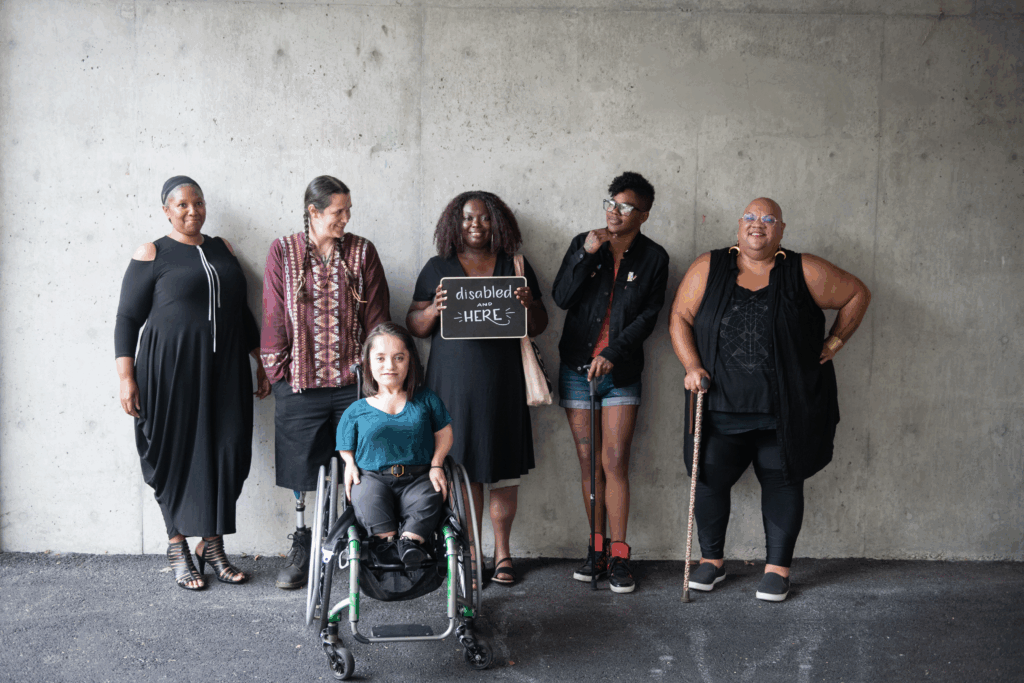
One critical area of concern is the exclusion of disabled people from research, which undermines equity but also compromises the quality and relevance of scientific findings.
For instance, a scoping review of over 2,700 clinical trials revealed that 35% explicitly excluded people with disabilities, particularly those with behavioural or psychiatric conditions. In 96% of cases, these exclusions were only “relatively” justified, meaning they lacked strong scientific rationale. This raises serious concerns about the generalisability of findings and the development of treatments that may not be safe or effective for disabled populations.
Lizzie Carline, EDI Project Manager at OH BRV, has spent several years working closely with people with disabilities, especially those with learning disabilities.
Lizzie said: “Inclusive research starts with listening. Engaging with people with disabilities, their carers and community organisations ensures our work is relevant, ethical and impactful. I’m always happy to support colleagues looking to make their communication and research more inclusive.”
Disability History Month is a reminder that inclusive research is essential for progress. By centring disabled voices and experiences, we can build a future where research truly serves everyone.
Equality, Diversity and Human Rights Week
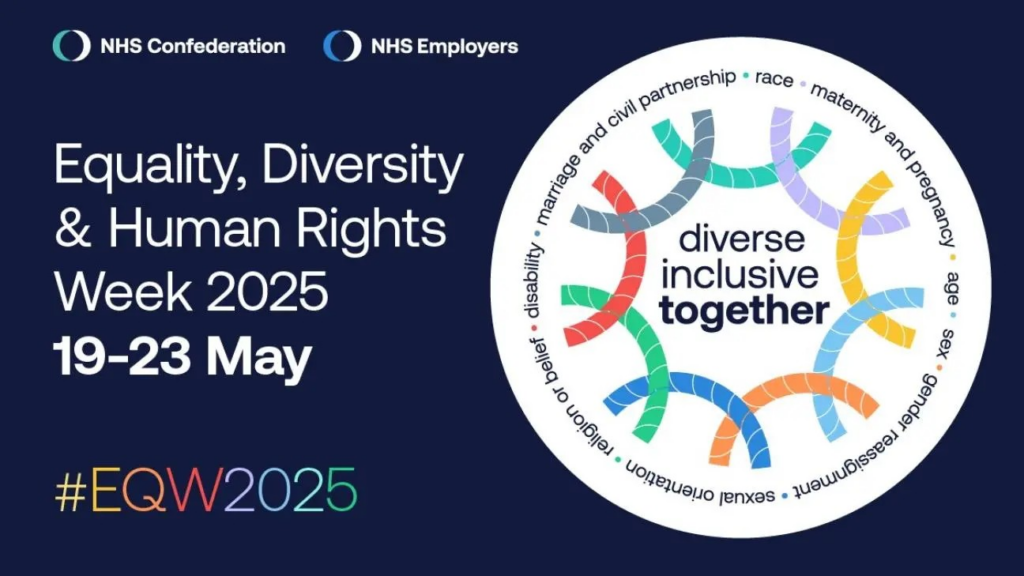
Equality, Diversity and Human Rights Week, (19 to 23 May) led by NHS Employers, is a key moment to reflect on consider the inclusiveness of the NHS, not just for patients, but for the workforce and the research that underpins our healthcare system. For health researchers, it’s a powerful reminder that meaningful and ethical research must represent the diverse population the NHS serves.
Too often, marginalised groups, whether due to race, disability, gender identity, or socioeconomic status, are underrepresented in clinical trials and health studies. This can lead to skewed data, unequal outcomes, and mistrust in medical research. For NHS researchers, embracing this week is about more than awareness; it’s about action and designing studies that include diverse voices, ensuring accessibility in recruitment, and challenging bias in both data collection and interpretation.
Inclusion isn’t just the right thing to do, it’s essential for scientific accuracy and health equity. By embedding equality and human rights into the research process, we can create knowledge that truly benefits everyone. NHS Employers’ campaign provides tools, stories, and guidance to help researchers and staff drive this change. Because better research leads to better care which begins with recognising every voice.
Deaf Awareness Week
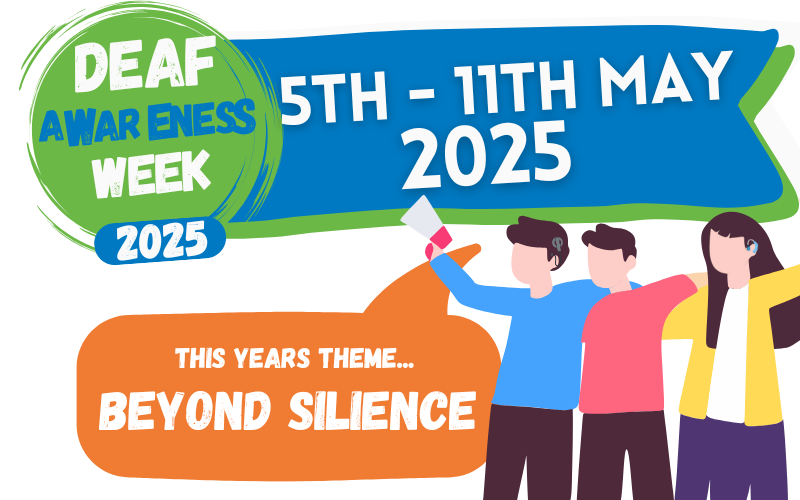
Deaf Awareness Week (5 – 11 May) is a vital reminder of the challenges faced by the Deaf community, especially when it comes to inclusion in health research. While medical studies aim to reflect and benefit all of society, Deaf individuals are often unintentionally left out. This happens for a variety of reasons, from communication barriers to a lack of accessible information.
For instance, research recruitment materials may not be available in British Sign Language, interpreters might not be provided during studies, or researchers may not be trained in Deaf culture, all of which can discourage participation.
The inclusion of deaf communities in health research is essential for the creation and enhancement of services and treatments that are developed with a full understanding of Deaf people’s needs, drawing us closer to health equality.
This year’s theme is “Beyond Silence”, highlighting the importance of looking beyond the common misconceptions about deafness and recognising the rich experiences, identities, and contributions of Deaf individuals in society. Involving Deaf individuals meaningfully through co-designing studies, offering accessible communication, and engaging Deaf researchers leads to better, more inclusive science.
To find out more, visit: Deaf Awareness Week 2025
Microaggressions

A microaggression is a small act or remark that makes someone feel insulted or treated badly due to their race, gender, culture or belief etc. The acts or remarks may be indirect, subtle or unintentional.
A University of Edinburgh webpage dedicated to microaggressions highlights specific microaggressions. It provides details of the effects of microaggressions and ways to counteract microaggressions as both microaffirmations and microinterventions.
A Race Equality Matters LinkedIn post provides a powerful visual representation of Racial Microaggressions. It illustrates how what you perceive to be an innocent remark can be very upsetting and offensive to others.
Some departments provide training in this area and our Training team would be interested to know if this is something that we should consider as part of our BRC Training Programme (contact [email protected]).
Unconscious bias

Unconscious bias can affect everyone and is triggered by our brain instinctively making quick assessments and categorising people and things. These judgements or decisions are based on prior experiences, assumptions or interpretations, without us being aware of it.
Understanding and counteracting both conscious and unconscious bias can help to make everyone more inclusive in our communication, behaviour and interactions with others.
Race Equality Matters has a powerful infographic on ways in which we can all challenge and recognise our unconscious bias and practice empathy.
The Royal Society has published useful information on unconscious bias including a YouTube video explaining what unconscious bias is and how it effects us. It also explains what is being done to minimise the effect of unconscious bias in its decision-making as a funder.
The University of Oxford offers training on Implicit bias in the Workplace. More information can be found on their website.
Race Equality Matters

Recent events including the COVID-19 pandemic highlighted significant disparities, underscoring the need for new approaches.
In 2020, Green Park and The Collaboratory founded Race Equality Matters (REM), a not-for-profit community interest company. Their goal is to drive meaningful workplace change that addresses the issues faced by ethnically diverse employees. They create solutions for those championing race equality in organisations and communities in the UK and beyond.
Together, they aim to achieve positive and impactful change for race equality.
With a mission to remove barriers and provide the solutions to tackle race inequality, REM has the ambition to set up a UK-wide collaboration of thousands of organisations and millions of employees creating change to achieve Race Equality in our workplaces.
You can register to join the REM network to access free resources that have been proven to help organisations tackle race inequality here.
Efforts to address racial inequality have made slow progress for decades.