Megan Pritchard, Research Assistant working for the NIHR Mental Health Translational Research Collaboration (MH-TRC) Mission has shared her experience of her first month supporting a children and young people’s mental health project, running in Greater Manchester.
Megan works on developing Patient and Public Involvement and Engagement (PPIE) opportunities to support the Children and Adolescents Data Resource (CADRE) project.
CADRE is a national network that securely links together local National Health Service’s (NHS), social services and school databases, compiling a large amount of data from different organisations. CADRE aims to make it easier for authorised researchers to access relevant deidentified information about children and young people which will improve research and lead to healthcare practitioners providing better, well informed, care.
In this article, Megan explains her experiences when she facilitated a PPIE session for young people, early on in her role.

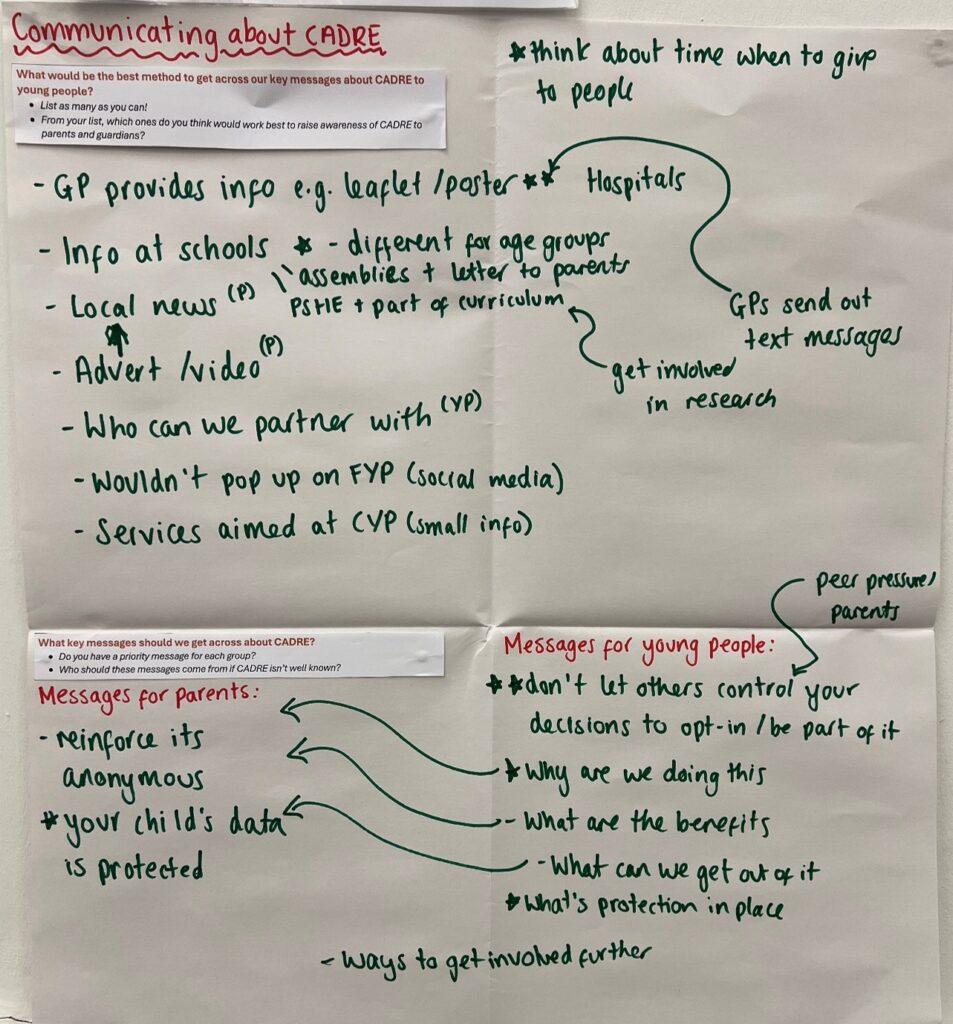
Soon after starting in my role as Research Assistant at the University of Manchester, I was tasked with developing PPIE sessions for children and young people. These sessions would focus on them sharing their thoughts about CADRE, asking questions about how the resource works and suggesting improvements.
I had heard about PPIE groups and was aware of their purpose, of providing people with lived experience a chance to join in the conversation about how research is conducted, but this would be my first time getting involved.
Happy to get stuck in, I observed my first PPIE session with parents and caregivers. I took notes of the discussions and considered the feedback around data protection, informed consent and the barriers to care currently experienced by families.
I listened while CADRE was communicated as a piece of the puzzle that is improving our healthcare system to better support children and young people’s mental health.
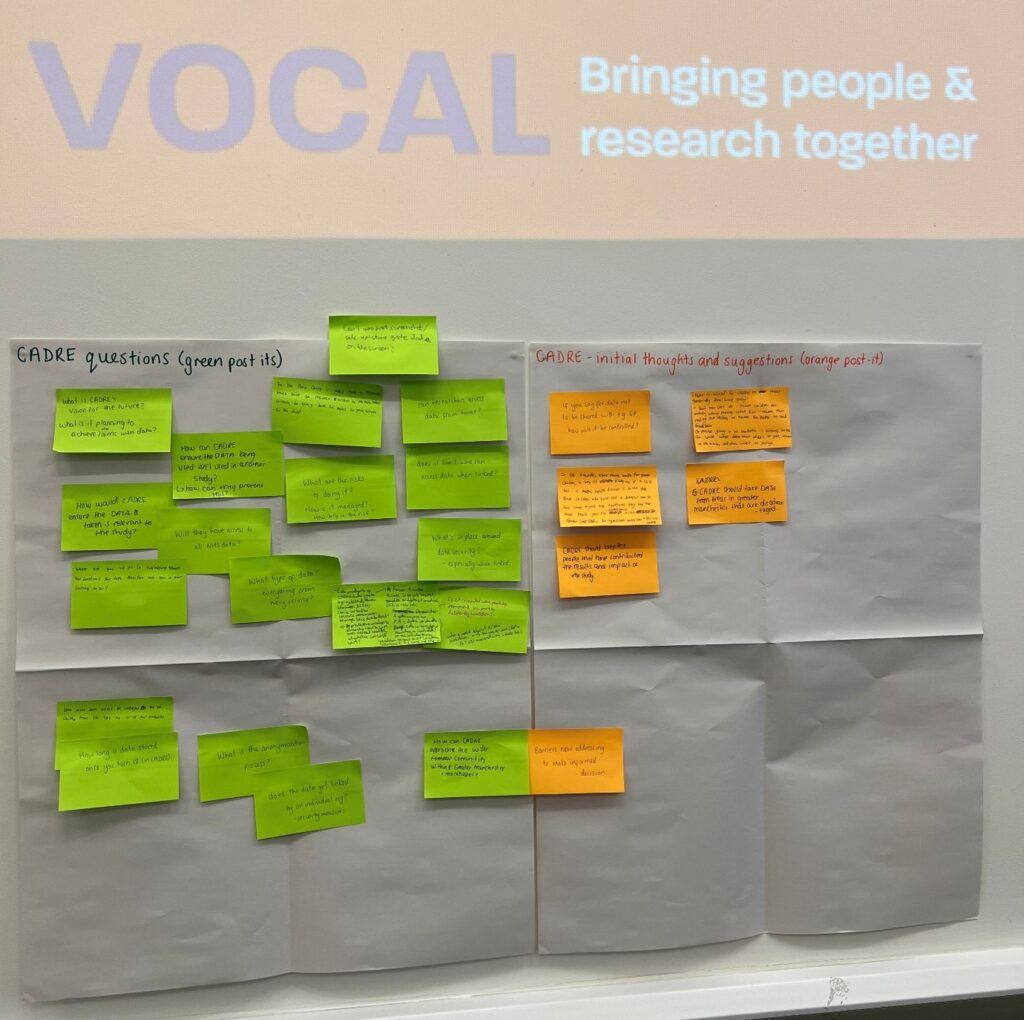
Two days later it was my turn to present a second PPIE session for young people to share their ideas. I was struck by the sophistication of dialogue that unfolded early in our session.
The young PPIE contributors had carefully considered the technical and security procedures of CADRE’s programme of work and asked insightful questions to try to gain a deeper understanding of the mechanics of the resource.
The young people were curious about CADRE’s real-world usability from the researcher’s perspective and were interested in its development and connectedness as a national data resource.
At this point in my role, my own understanding of the project was emerging. I had familiarity with the resource but confidently explaining the complex processes within CADRE was not yet a skill in my toolkit.
Although I knew I didn’t have to answer every question, I left feeling disheartened thinking of things I could have answered to make the session as impactful as possible for the young people.
I reflected during my train journey home to North Wales and channelled this discomfort into motivation. I identified the gaps in my knowledge and utilised my colleagues and internal resources to improve my understanding.
I shared my learnings from the session with a peer which sparked conversations about how to communicate data processes openly and effectively to young people. Together, we developed an accessible glossary of terms for CADRE’s website to support transparency and build public trust for the project. Our reflections also informed an internal glossary to help familiarise colleagues to technical language and internal acronyms.
Although the experience of running the PPIE group was challenging, I’ve learned that it’s “okay” if things don’t go as planned as what matters is responding with curiosity and adaptability. By demonstrating resilience, I turned what we didn’t know into resources that could help others, all because of the young people who spoke up and shared their perspectives.
When sharing the feedback with colleagues, I reflected how young people’s digital fluency should not be underestimated, nor their readiness to investigate research projects at a granular level.
Additionally, the young people were attuned to other people’s needs, suggesting CADRE’s processes, albeit technical, should still be communicable to all levels of digital maturity. This insight inspired the creation of infographics detailing these processes to support future engagement sessions and provide an accessible resource.
Considering the needs and perspectives of different audiences has now become second nature in my work, aligning with inclusive research culture frameworks that strive for transparency and accessibility.