
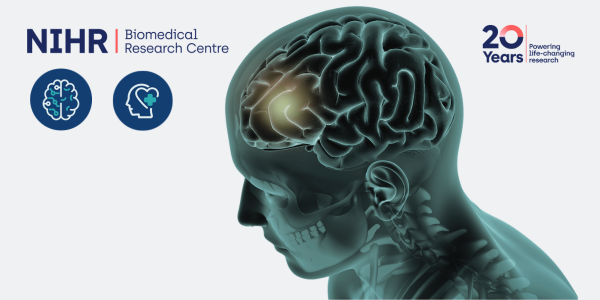
Researchers in our Biomedical Research Centre (BRC)’s Brain Technologies and Depression Therapeutics Themes have demonstrated, for the first time, that a key emotional centre deep in the human brain directly influences how we interpret ambiguous (unclear or confusing) social cues.
In a new study, published in Neuron, researchers used low-intensity focused ultrasound to temporarily and non-invasively alter activity in the amygdala – a region of the brain known to be involved in emotion and affected in depression. They found that this changed how people responded to facial expressions, particularly when those expressions were emotionally unclear.
When the amygdala was temporarily modulated, participants became more likely to approach neutral (emotionally ambiguous) faces, suggesting they interpreted them more positively.
Participants also took longer to respond to neutral and happy faces, indicating increased difficulty distinguishing between similar emotional signals. Brain imaging showed that stimulation reduced communication between the amygdala and other brain regions and altered its internal chemical balance. Importantly, the effects were specific: learning from feedback was unchanged, and stimulating a different brain region produced different behavioural effects.
The findings provide rare causal evidence in humans about how the brain processes uncertainty in emotional situations, with potential implications for understanding mental health conditions.