Welcome back to the NIHR Biomedical Research Centre: Oxford Health Newsletter, providing a round up of our latest news.
To feature in future editions email Oxford Health R&D Comms.
Please note: From 1 April 2026 the BRC Core Award no longer supports a service for statistical work/analysis. Please note that following an evaluation at the Mid-Term Review, from 1 April 2026 the BRC no longer provides any core funding for the statistical team in the group of Professor Ly-Mee Yu. Research teams requiring statistical support can contact Professor Yu or others but will have to use grant or Theme monies to pay for any work undertaken.

Our research in the news
- Oxford Mail: Oxford Health tops UK recruitment for schizophrenia trial
- Oxford Mail: Oxford Health NHS Foundation Trust names new chief executive
- Oxford Mail: Oxford study aims to speed up dementia diagnoses in UK
- News Medical: £80 m challenge for faster, better dementia diagnosis launched
- The Guardian: Why demand for the shingles vaccine is soaring
- MSN.com: Shingles vaccine may lower your risk of heart disease, new study finds
- MSN.com: Shingles vaccine may also protect your heart, major study finds
- Yahoo Life: Shingles Vaccine Linked to a Surprising Second Benefit in Adults Over 60

World Mental Health Day
To mark World Mental Health Day on 10 October, and this year’s theme, “Lived experiences heard: real voices, real change”, we showcased how listening to patients, carers and public contributors is shaping Oxford Health research. Their insight is influencing priorities, study design, participant experiences and communication, helping make research inclusive, accessible and relevant.
Read more: BRC: Oxford Health news

How inclusive is research across Oxford and Oxford Health?
More than 320 colleagues from NIHR research organisations across Oxford and Oxford Health shared their experiences in a survey exploring research culture, equality, diversity and research inclusion. The findings are shaping new initiatives, training and targeted actions to improve inclusion and representation across research.
Read the full report: EDI Website

Study sheds new light on how ketamine may act rapidly in the human brain
Researchers supported by our BRC have identified a possible brain mechanism that may help explain ketamine’s fast-acting antidepressant effects. Using fMRI, the team found ketamine reduced activity in the habenula, a brain region linked to processing negative experiences. The findings could help guide the development of faster, more targeted treatments for depression.
Read more: BRC: Oxford Health news

60 seconds with Andreia Costa
In our latest 60 Seconds with interview, Andreia Costa, Project Manager for Training & Career Development at our BRC, shares how lived experience inspired her to establish Neurodiverse Voices Connect. Andreia discusses the importance of putting neurodivergent voices at the heart of research and her hopes for a more inclusive future.
Read more: BRC: Oxford Health news

Building skills, confidence and research careers
More than 1,500 researchers benefited from our BRC training and development opportunities during 2025/26. The programme supported research skills, career development and collaboration, with strong engagement from early career researchers and high satisfaction ratings. New initiatives also strengthened research inclusion and cross-institutional partnerships across the NIHR community.
Read more: BRC: Oxford Health news

What's on this term? Explore upcoming research events
As Michaelmas term gets under way, now is the perfect time to explore our upcoming events. Highlights include the Monica Fooks Lecture delivered by our BRC Director Professor Rachel Upthegrove, the AIM webinar: Translational Psychological Science for Youth Mental Health delivered by Professor Tim Dalgleish who explores how advances in mental health science could lead to more effective, accessible and digitally delivered interventions for children and young people, plus much more.
Visit our BRC events web page: BRC: Oxford Health events

DPUK blood biomarker project takes next step towards NHS dementia diagnosis
A Dementias Platform UK-led project has been selected for the UKRI NHS Fit for the Future Dementia Challenge to help bring blood-based biomarkers into routine NHS memory services. Building on the READ-OUT study, the project aims to support faster, more accurate dementia diagnosis and improve access to care, treatment and research.
Read more: OHFT news
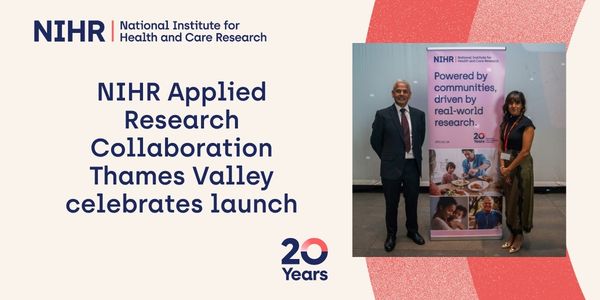
The launch of the Applied Research Collaboration Thames Valley
NIHR ARC Thames Valley has launched with £17.8 million funding over five years to help research improve health and care more quickly. Hosted by Oxford Health NHS Foundation Trust (OHFT), the collaboration will focus on children and young people, working-age adults and older people, while exploring how digital tools, data and social care can reduce inequalities and improve outcomes across the region.
Read more: OHFT news

Oxford study highlights self-harm concerns in teenagers with chronic pain
Research led by the University of Oxford’s Department of Psychiatry is the first to examine self-harm thoughts and behaviours within a UK paediatric chronic pain clinic. The study found high rates among teenagers living with chronic pain and suggests that care should take a more integrated approach, considering mental health alongside physical symptoms, with clear pathways to specialist support when needed.
Read more: DoP news

Gene therapy trial offers hope for inherited blindness
Researchers supported by the NIHR Biomedical Research Centre: Oxford have reported promising results from a clinical trial of gene therapy for an inherited form of blindness. The treatment improved visual function in participants with AIPL1-related retinal disease, a rare genetic condition that causes severe sight loss from birth, offering hope for future treatments for inherited retinal disorders.
Read more: BRC: Oxford news